Schools & Cost
Is Dental Assisting School Hard?
Dental assisting school is challenging but very doable. What the coursework covers, which parts trip students up, and how to get through it while working or raising a family.
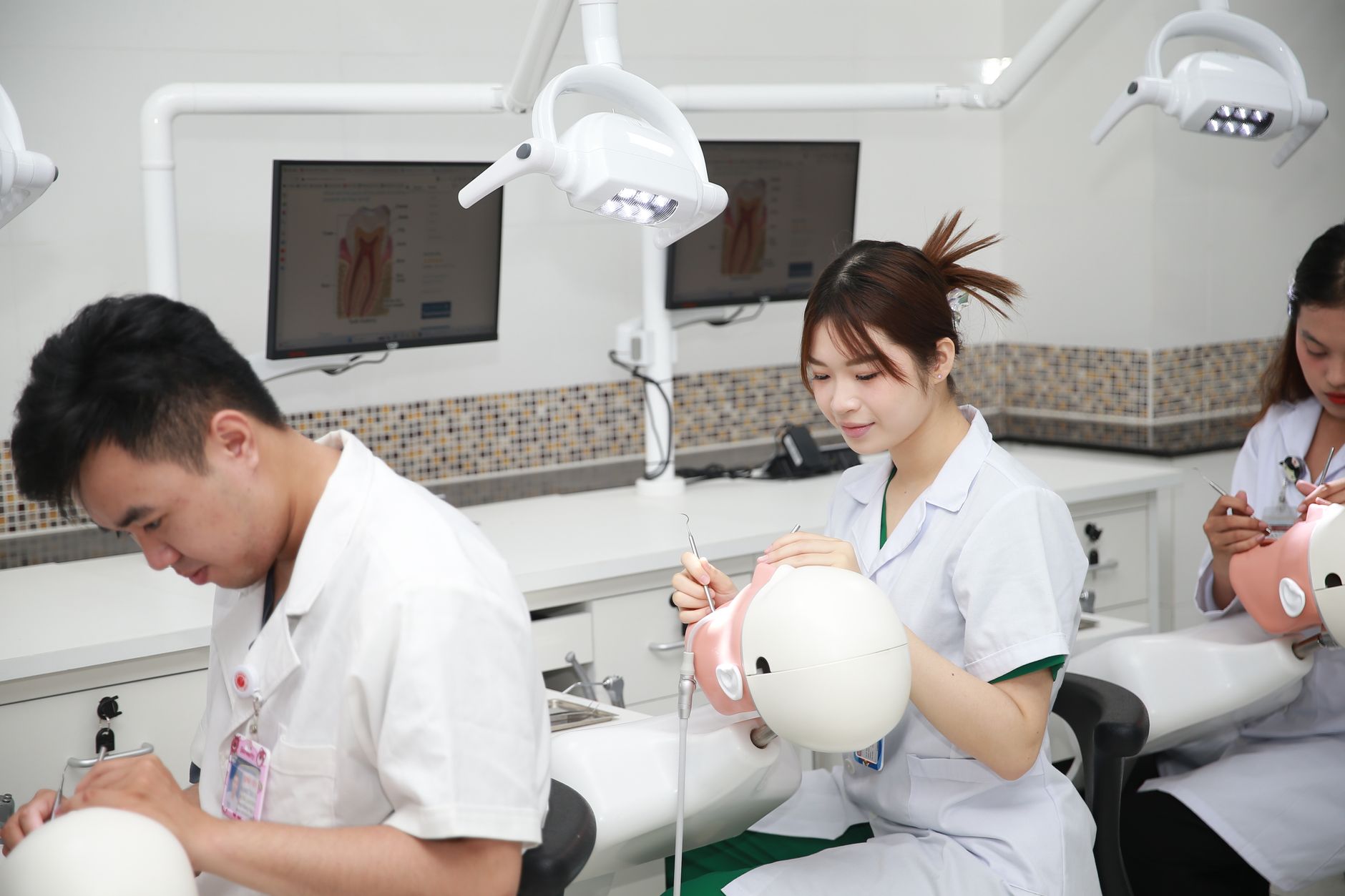
It's work, but it's designed for people starting from nothing. Most students in a Colorado dental assisting program have never worked in healthcare. What catches people off guard usually isn't one hard subject. It's how much gets packed into a few weeks.
What you'll cover
Early on, a lot of it is memorization: the tooth numbering system, tooth surfaces, oral anatomy and a long list of instrument names. None of it is conceptually hard, but there's a lot of it, and it builds week to week.
Infection control is next, including sterilization, PPE, and OSHA and CDC protocols. It's detailed rather than difficult, and the steps have to happen in a set order every time.
Then there's the hands-on part: tray setups, passing instruments, running suction, mixing cements and impression materials. This part feels awkward at first for nearly everyone, and it gets easier with repetition.
Radiography is where people struggle most. You're learning radiation safety, how to position the sensor, exposure settings and how to tell a usable image from a retake. It's precise work, and it counts, because Colorado requires qualifying training before you take x-rays (here's the rule).
You'll also cover patient care: taking vitals, handling medical emergencies, CPR, and talking to someone who is clearly scared of the dentist.
Where students usually get stuck
Vocabulary is the first hurdle. By the second or third week there are more terms than most people can hold in their heads, which is why flashcards are so popular.
X-ray positioning is the second. Getting a clean image of the back molars on a patient with a strong gag reflex takes practice, and early retakes are normal.
Speed is the third. Good assistants hand the dentist the next instrument before being asked. That comes from doing the same procedure over and over, so don't expect to have it in week two.
The first time you work on a real patient, you'll probably be nervous. Almost everyone is, and it passes after a session or two.
How to make it easier
If you can, learn the terminology before day one. Free online resources are enough, and the first few weeks will feel much calmer.
Study for twenty minutes a day rather than three hours the night before class. Quiz yourself on instrument names from photos. Walk through tray setups in your head while you're driving. Ask questions in the lab, because that's the place where mistakes don't cost anything.
Most importantly, choose a schedule you can actually keep. Colorado's weekend programs exist because most students are working. If you're balancing a job and kids, a Saturday class you never miss beats a weekday class you keep missing.
How it compares
Dental assisting programs are much shorter and less science-heavy than hygiene programs, which are college degrees with prerequisites and a licensing exam. They're closer to medical assisting in difficulty, just more focused on one area of healthcare.
If you can keep up steady study and practice, you can handle it, including while holding a job. To plan the time, see how long it takes to become a dental assistant. To find a program that won't leave you on your own, use our school checklist.
Updated September 17, 2026.
FAQ
What is the hardest part of dental assisting school?
Many students say the hardest parts are memorizing terminology and instruments, learning radiography technique, and building speed and confidence chairside.
Do you need to be good at science for dental assisting?
You'll learn some anatomy, infection control and radiation safety, but you don't need an advanced science background. Consistent study matters more.
How many hours a week should I study?
For a short weekend program, plan on several hours of review each week outside class, especially for terminology and radiography.